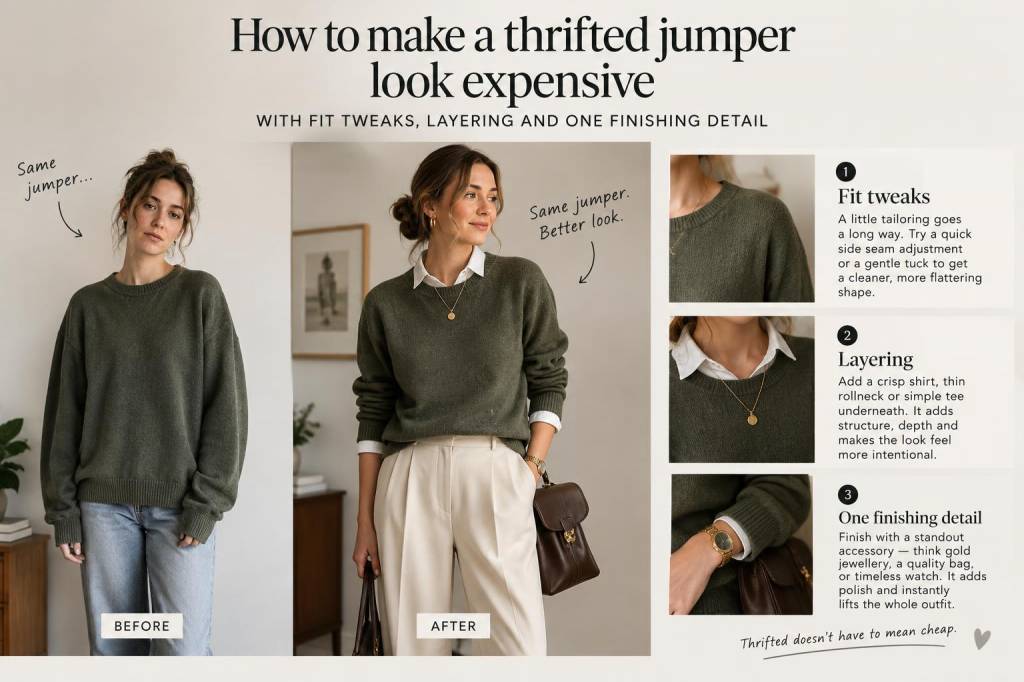
I have a soft spot for thrifted jumpers because they can feel like a small victory: a piece with history, character, and usually a far friendlier price tag than anything hanging on a polished rail in a boutique. But I also know the problem. A jumper can look charming in a shop mirror and then feel a little shapeless, a little tired, or a little too casual once it reaches a real wardrobe. For me, making a thrifted jumper look expensive is never about pretending it came from a luxury label. It is about giving it presence. A few smart fit tweaks, a considered layering plan, and one finishing detail can change everything.
When I shop secondhand, I look past the hanger appeal and ask myself a simple question: does this jumper have good bones? I mean by that the fabric, the knit structure, the neckline, and the way it sits on the body. Even a slightly worn piece can feel elevated if the shape is right or if it can be adjusted easily. I have bought jumpers that looked ordinary at first glance but became favourites once I shortened the sleeves, tucked in the hem, or paired them with a sharper layer underneath. That is where expensive-looking style really begins for me: not with cost, but with intention.
Fit is where everything changes
If a jumper fits beautifully, people usually assume it costs more than it did. That is one of my favorite style truths. Fit matters more than a logo, and far more than trendiness. I look for shoulder seams that sit near the right place, sleeves that do not overwhelm my hands unless that is part of the design, and a body length that works with my proportions. A thrifted jumper may not need major tailoring, but it often benefits from a few small adjustments.
One of my most reliable tricks is to define the waist without making the knit look forced. If the jumper is roomy, I will try a gentle front tuck into straight-leg jeans, a half-tuck into tailored trousers, or a neat tuck into a midi skirt. That little break at the waist gives shape and makes the whole outfit feel more deliberate. If a jumper is cropped in an awkward way, I often layer it over a crisp shirt so the hem feels intentional rather than accidental.
I also pay attention to sleeve length. Sleeves that are too long can look cosy, but they can also make a jumper seem sloppy if everything else is not balanced. If the knit is valuable enough to keep, I sometimes fold the cuffs under once or twice for a neater line. With slimmer knits, I will even push the sleeves slightly up the forearm so the outfit feels light and polished. It is amazing how much refinement can come from simply showing a bit of wrist.
When a jumper is boxy, I like to style it with more tailored bottoms. Straight jeans, cigarette trousers, or a structured skirt help create contrast. When a jumper is fitted, I often go the other way and pair it with wider-leg trousers or a full skirt to create balance. I am always thinking about proportion, because expensive style is often just proportion done well.
Fabric and texture matter more than labels
Secondhand jumpers can come in everything from fine merino to chunky acrylic, and I think texture is one of the biggest clues to how polished a piece will look. Natural fibres often drape more beautifully, pill less dramatically, and hold shape in a way that feels refined. That said, I do not dismiss synthetic knits automatically. I have found some wonderfully soft acrylic blends that looked far more expensive once styled properly.
Before I wear a thrifted jumper, I usually give it a careful once-over. I check for pilling, stretched cuffs, loose seams, and bobbling around the underarms. A simple fabric shaver can make a huge difference, especially on darker colours where wear shows more quickly. I also steam or gently press the knit if it has been compressed by storage. A jumper that is clean, smooth, and neatly shaped will always look more polished than one that is technically nicer but neglected.
Colour matters too. I tend to think rich neutrals, deep navy, charcoal, cream, camel, forest green, and warm chocolate tones look especially expensive. That does not mean bright colours cannot work. They absolutely can. I just find that jewel tones and softened shades often read as more luxe than very flat or faded colours. If the knit has a slightly worn finish, pairing it with elevated basics helps restore balance.
Layering is where a thrifted jumper starts to feel styled
Layering is my favourite part because it lets a simple knit do much more than its price would suggest. A thrifted jumper rarely needs to stand alone. In fact, I think it often looks better when it is part of a thoughtful composition. I like to build layers with contrast in mind: soft against crisp, relaxed against structured, matte against glossy.
One of my most-used combinations is a jumper over a white shirt with the collar and cuffs showing. It feels classic without trying too hard, and it instantly makes the knit look smarter. I also love layering a fine turtleneck underneath a V-neck or crewneck jumper in colder months. It adds depth and makes the outfit look designed rather than thrown together. If the jumper is slightly oversized, a slim layer underneath helps it feel intentional.
Another approach I use often is to wear a jumper over a slip dress or satin skirt. The contrast between the casual knit and the sheen of the skirt creates an expensive tension that I really enjoy. It feels effortless, but in a carefully considered way. A cropped knit over a longer shirt dress can create the same effect, especially if the colours are kept close and calm.
Outerwear matters as well. A thrifted jumper can be transformed by a good coat, blazer, or trench. A blazer in particular adds instant structure. I like a slightly oversized blazer over a neat jumper and straight jeans because it gives the outfit a clean outline. If I want something softer, I will choose a long wool coat and keep the knit simple underneath. The coat frames everything else, so even an inexpensive jumper can appear much more refined when viewed as part of a full silhouette.
Accessories should support the layering rather than compete with it. A silk scarf at the neck, a slim leather belt, or a structured bag can quietly raise the whole outfit. I avoid overcrowding the look, because too many pieces can make a thrifted jumper seem busy instead of elevated. A restrained approach usually works better.
One finishing detail can carry the whole outfit
If I had to choose just one finishing detail, I would choose the neckline. It sounds small, but the neckline shapes the entire mood of a jumper outfit. A clean collar, a sharp necklace, or a neat shirt layer can make a secondhand knit look much more intentional. When the neckline feels finished, everything below it seems more polished too.
For crewneck jumpers, I like a fine chain necklace, a pearl necklace, or a subtle pendant that sits just above the knit. The idea is not to overload the neckline, but to create a focal point. If the jumper has a V-neck, I often leave the area mostly open and let the cut do its job. A small pendant can be enough. With a polo neck or turtleneck, I usually skip necklaces altogether and focus on earrings, hair, and outerwear instead.
I also consider the collar of a shirt if I am layering underneath. A crisp white collar can make a thrifted jumper feel almost preppy and expensive, especially when the knit is slightly relaxed. If the shirt is visible at the cuffs too, the outfit feels even more composed. Sometimes that is all it takes: one smart neckline detail to shift the entire impression from casual to considered.
Another finishing detail I love is footwear. A jumper can look completely different depending on what sits below it. Loafers make it feel sharp. Sleek ankle boots make it feel urban. Clean trainers make it feel modern and easy. Heeled boots can give even a basic knit a more elevated silhouette. I choose shoes as though they are punctuation, because they often decide whether the look feels accidental or polished.
Small adjustments I reach for again and again
| Adjustment | What it changes | Style effect |
|---|---|---|
| Front tuck | Creates shape at the waist | Sharper, more styled |
| Steam and de-pill | Smooths the surface and restores structure | Cleaner, more refined |
| Shirt layer underneath | Adds collar, cuffs, and contrast | Classic and intentional |
| Neat sleeve fold | Shortens excess volume | More polished proportion |
| Structured bag or shoe | Balances softness in the knit | More expensive overall impression |
What I look for when I thrift
When I am browsing secondhand jumpers, I do not just scan for brand names. I look for signs that a piece will respond well to styling. Good knit density matters because it usually holds shape better. A slightly heavier fabric can drape beautifully and feel more substantial. I also check the neckline, because that is where many jumpers reveal whether they can be styled up easily.
Simple designs often work best. Cable knits, ribbed crews, fine roll necks, and clean V-necks are usually the easiest to elevate. Very novelty details can be fun, but I find they are harder to make look expensive unless the rest of the outfit is very restrained. I tend to choose pieces with quiet character rather than loud decoration. That gives me more room to build an outfit around them.
If a jumper has a slightly vintage feel, I lean into it. I might pair it with tailored trousers, polished loafers, and a neat coat so it looks like a deliberate style choice rather than a random find. If it feels more minimal, I let texture do the talking and keep the rest of the outfit simple. Either way, I am trying to create a clear point of view.
My personal formula for making it feel expensive
For me, the formula is always a mix of shape, contrast, and restraint. Shape comes from fit tweaks and proportion. Contrast comes from layering soft knits with crisp shirts, structured coats, or tailored bottoms. Restraint comes from choosing one strong finishing detail instead of several competing ones. When those three things work together, a thrifted jumper can look far more elevated than a brand-new one with no styling at all.
I also think confidence matters. When I wear a thrifted piece as though it belongs exactly where it is, it tends to look better. That sounds simple, but I believe it. Clothes have a way of rising to meet the care we give them. A jumper that has been washed gently, de-pilled carefully, shaped thoughtfully, and styled with intention carries that attention visibly. It feels personal, and personal style often looks more expensive than anything bought in a hurry.
Some of my favorite outfits have come from jumpers I nearly left behind because they looked too ordinary on the rail. Once I took them home and worked with the fit, added a sharp layer, and finished with one thoughtful detail, they became the pieces I reached for most often. That is why I keep thrifting. There is always room to make something simple feel special, and a good jumper gives you exactly that opportunity.