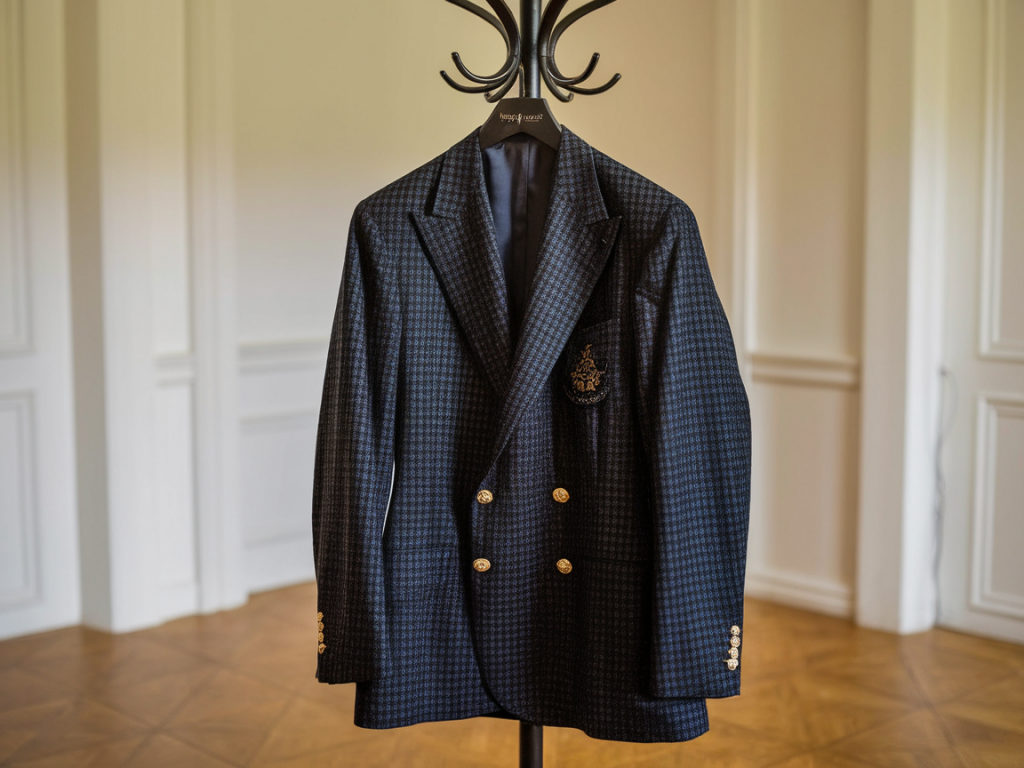
There’s something quietly thrilling about rescuing a tired blazer and giving it a new life. I have a small collection of secondhand and long-loved jackets that I keep returning to — not because they’re perfect, but because with a little tailoring attention they feel fresh, modern and utterly wearable again. You don’t need a sewing machine or a professional tailor for everything; often three simple tailoring tricks you can do at home are enough to make a blazer look as if it was made for you.
What I keep in my mending kit
Before we start, here are the few tools I always have to hand. They’re inexpensive and make tiny alterations much easier:
Trick 1 — Reshape the shoulders and reclaim structure
A blazer that looks droopy at the shoulders or has lost its crisp silhouette instantly reads older or worn. Adding or replacing shoulder padding and reinforcing the shoulder seams with interfacing is my go-to first step. It’s an instant lift and sets the whole jacket right.
How I do it: first I steam the blazer to relax any creases and see the true shape. If the shoulders are sagging, I remove the old pads if they’re squashed and replace them with thin replacement pads — I favour soft cotton or low-profile foam pads so the look remains natural. The pads slip under the lining; if the lining is fixed, you can tack the pad in place with a couple of small stitches through the lining so it won’t move.
If the shoulder seam has lost structure, a small strip of fusible interfacing ironed into the seam allowance (inside the jacket) helps the shoulder keep its shape without changing the external look. Use lightweight interfacing for unstructured blazers and medium for more tailored shapes.
Tip: try different pad thicknesses with the blazer on. Stand in front of a mirror and move your arms — you’ll immediately see which option feels the most natural.
Trick 2 — Tailor the fit with simple take-ins and darts
The single best way to refresh a blazer is to make it fit you. Even half an inch at the waist can change the silhouette from boxy to polished. You don’t need professional equipment for a basic take-in or adding darts — just some pins, a marker, and hand-stitches if you prefer a non-permanent trial.
How I do it: put the blazer on over a thin top and button it. Pinch the excess fabric at the side seams or at the back and pin it snugly while I move around — sit, raise my arms, walk. That tells me how much to remove so the jacket still feels comfortable. Mark the new seam line with tailor’s chalk.
For a permanent alteration, I either hand-sew a new line along the marked seam with a backstitch (invisible from the outside when done carefully) or baste it and finish with a machine stitch if I have a machine. For a low-commitment option, I use small slip stitches at the inside seam that can be removed later. If you’re unsure about the amount to take in, take it in gradually: sew a few basting stitches, try the blazer again, then adjust.
Alternative: if the sleeves are too long, you can fold the cuff under and hand-stitch it in place for a casual roll, or measure the new desired length, mark, and hand-hem the sleeve. If you’d like a more structured sleeve shortening, baste the new length and have a tailor finish the hem neatly.
Trick 3 — Update the small details (buttons, pockets, elbow patches)
Changing the small things can feel like changing the whole garment. I’ve turned a dated single-breasted blazer into something more current simply by swapping buttons, adding elbow patches, or updating the pocket style.
Buttons: Replace tarnished or cheaply made buttons with something with weight — horn-effect, mother-of-pearl, or metal shank buttons instantly elevate a jacket. Remove the old button by cutting the stitching carefully, sew on the new button with several secure passes, and sew a small thread shank if needed so the button sits nicely over thicker fabrics.
Elbow patches: A pair of suede or leather-effect elbow patches heals worn fabric but also injects personality. I cut a patch slightly larger than the worn area, iron on a small fusible patch as a stabiliser on the inside, then hand-stitch the patch in place using an invisible slip stitch or a neat topstitch for contrast.
Pocket refresh: If the pocket flaps are floppy or misshapen, I iron a small piece of fusible interfacing into the flap’s underside. For patch pockets that are sagging, I sew a small reinforcing line along the pocket top. You can also add a ticket pocket or change the angle of the breast pocket for a more contemporary look — these are slightly more advanced but still achievable with patience.
Steaming, pressing and finishing touches
After any alteration, steaming and pressing is the magic that makes the work invisible. I always finish by steaming the whole blazer, paying special attention to lapels and seams, and pressing through a cloth rather than directly on delicate fabrics. A good brush (I like a natural-hair clothes brush) lifts lint and revives the nap on wool blazers.
Small details to remember:
When to call a tailor
There’s a lot you can do at home, but some jobs are worth the pro: reshaping a heavily padded or heavily constructed jacket, fully relining a blazer, or significant structural changes like moving buttons or completely changing sleeve heads. If you love the blazer and it needs extensive work, a professional alteration is usually worthwhile — it costs less than buying a new high-quality jacket and keeps the piece you already love.
Quick FAQs I get asked
Can I add shoulder pads to any blazer? Yes, as long as the lining allows access or you’re comfortable tacking them inside the seam. Choose subtle pads for a natural look.
Will fusible interfacing show through lightweight fabrics? Use a very lightweight interfacing and test on a hidden seam first. For sheer or delicate fabrics, I avoid fusible options and use hand-sewn reinforcement instead.
How do I match thread and buttons? For thread, match the dominant fabric colour. For buttons, think about contrast — a darker button can modernise a light blazer, while matching buttons keep it classic.
There’s something so satisfying about taking an overlooked blazer and turning it into one of my favourite go-to pieces. With a couple of clever moves — reclaiming structure at the shoulders, tailoring the fit, and updating the details — you can refresh a tired jacket without a full overhaul. Try one trick at a time and enjoy the little transformation process; often that’s half the fun.